
Batucada Instruments Explained: The Heartbeat of Brazilian Carnival
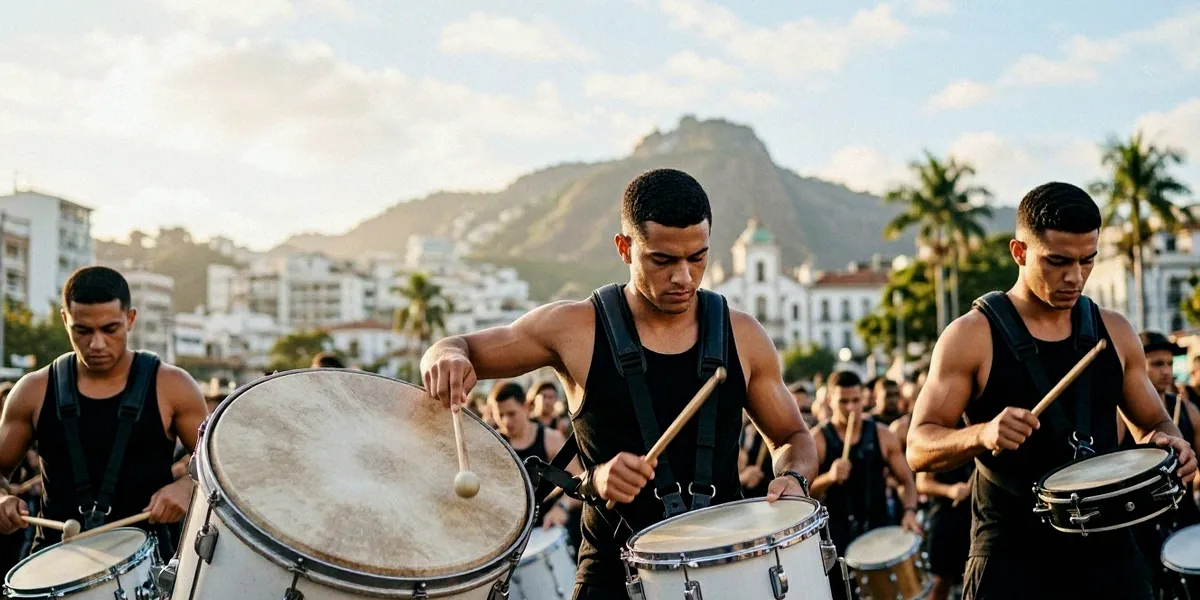
Stand near the front of a batucada ensemble and something happens before you can explain it. The surdo lands in your chest like a second heartbeat. The tamborims crack across the top like fireworks. Your feet start moving on their own, and by the time your brain catches up, you’re already part of the rhythm. That’s the power of a Brisbane samba school in full flight — a wall of percussion that turns strangers into a crowd and a crowd into a party.
If you’ve ever watched our crew play at the BrisAsia Festival or shuffled along at a West End street event and wondered what all those drums actually do, this guide is for you. We’re breaking down every instrument in a batucada, how they lock together to create the samba groove, and how you can pick one up yourself — no musical background required.
What Is a Batucada? The Engine Room of Brazilian Carnival
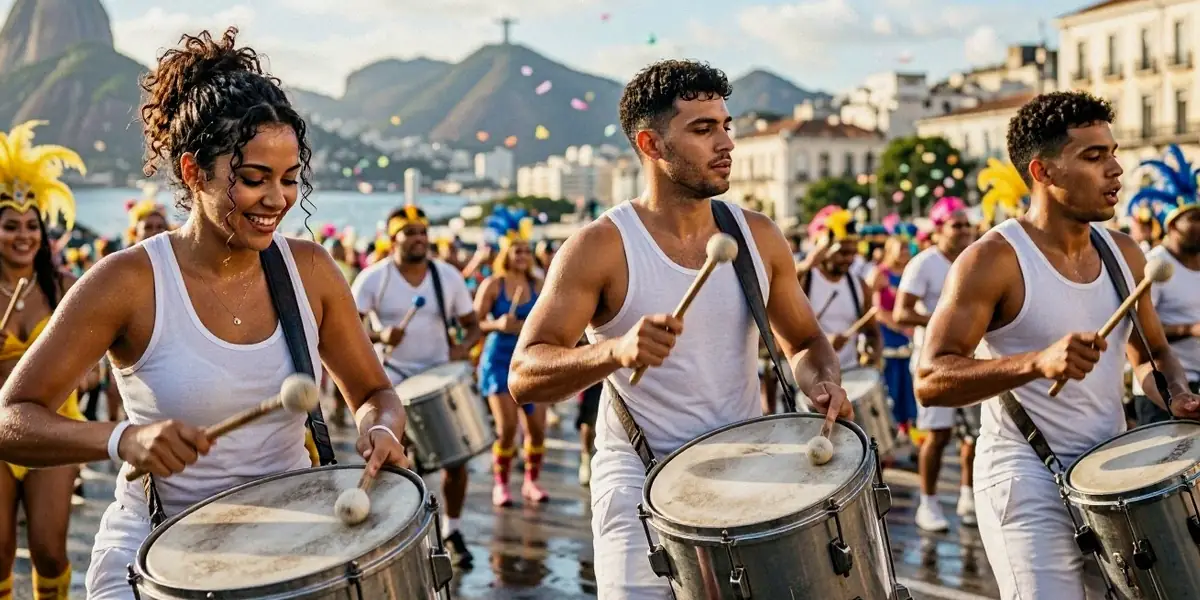
Batucada is a percussion-heavy style of samba built almost entirely around drums and shakers. The word comes from “bater,” to beat, and that’s exactly what it is: a dense, driving wall of rhythm with no horns, no strings, and no singer required. In Rio-style carnival, the batucada is the rhythmic core that powers everything — the parade, the dancers, the crowd. It’s the sound you hear thundering down the Sambadrome at 2am, and it’s the same sound we bring to events around Brisbane.
Our group regularly performs at festivals like BrisAsia Festival, where thousands of locals get their first taste of live Brazilian carnival culture. For many people, it’s the moment they realise samba isn’t just music — it’s a physical experience.
Batucada vs. Bateria: What’s the Difference?
The terms get used interchangeably, but there’s a distinction worth knowing. A bateria is the full percussion section of a samba school — sometimes 200 or more drummers, tightly organised and rehearsed to accompany a parade with floats, singers, and thousands of dancers. A batucada is a smaller, more flexible version: a standalone percussion group that can perform anywhere, from a stage to a street corner to a festival tent.
Think of the bateria as the full orchestra and the batucada as the tight, mobile rhythm section. Both share the same instruments and the same swing, but a batucada is built to roam, adapt, and get a crowd moving in any setting.
Why Batucada Is the Ultimate Crowd-Starter
There’s a reason festival organisers keep booking us back. A batucada doesn’t need a stage, a sound system, or a warm-up act. The moment the surdos drop, people stop walking and start watching. Within thirty seconds, they’re clapping. Within a minute, they’re dancing. It’s music that demands a physical response, and it works on absolutely everyone — toddlers, grandparents, and everyone in between.
The Core Instruments of a Batucada Ensemble
Every batucada is built from the same family of instruments, each with a specific job. Some hold down the pulse, some decorate it, and some cut through the mix like a whip. Here’s what you’ll find in our setup — and yes, our Brisbane samba school provides all of these for beginners at our weekly classes in West End, so you don’t need to buy anything before your first session.
Surdo: The Heartbeat
The surdo is the largest drum in the batucada and the one you feel before you hear. It’s a deep, resonant bass drum played with a mallet, and it anchors the entire ensemble. In a standard setup, you’ll find three surdos tuned to different pitches — high, medium, and low — playing interlocking patterns that create the pulse of the samba. If the batucada is a body, the surdo is the heartbeat.
Repinique: The Leader
The repinique is a small, high-pitched drum played with a stick and often a bare hand. It’s the instrument that leads the group, calling out signals, cues, and breaks that the rest of the ensemble follows. When you hear a batucada suddenly shift gears or drop into a new section, that’s the repinique player calling it. It’s the most exposed role in the group — and the most fun.
Tamborim: The Spark
The tamborim is a tiny, high-pitched frame drum played with a flexible stick called a baqueta. Its patterns are fast, syncopated, and sharp, cutting through the low end of the surdos like a spark. The tamborim carries some of the most recognisable samba phrases, including the famous teleco-teco pattern that defines the genre’s swing.
Agogô: The Melodic Metal
The agogô is a set of two or three metal bells played with a stick. It’s one of the oldest instruments in samba, with roots in West African music, and it adds a bright, metallic tone that locks in with the tamborim. The agogô’s pattern is steady and hypnotic, providing a melodic counterpoint to the drums.
Caixa: The Snare Drive
The caixa is a Brazilian snare drum, strung with metal wires across the bottom head to give it a buzzing, crisp sound. It plays a relentless stream of sixteenth notes that drives the ensemble forward. If the surdo is the heartbeat and the repinique is the leader, the caixa is the engine — constant, propulsive, and essential.
Chocalho and Ganzá: The Shakers
The chocalho is a frame of metal jingles, and the ganzá is a metal or plastic tube filled with beads or seeds. Both are shakers, and both play continuous sixteenth-note patterns that fill in the high frequencies and glue the ensemble together. They’re often the easiest instruments for beginners to pick up, which makes them a perfect entry point.
How the Instruments Lock Together: The Samba Groove
Samba is written in 2/4 time, but the magic isn’t in the time signature — it’s in the interlocking patterns, called levadas, that each instrument plays. No single instrument carries the whole groove. Instead, each part fits into the gaps left by the others, creating a dense, layered rhythm that feels like one unified pulse.
Our team breaks down these patterns slowly in our samba dance classes Brisbane wide, so dancers and drummers can understand how the rhythm works from both sides. It’s one thing to hear samba; it’s another to feel exactly where each beat lands.
The Role of the Repinique in Calling the Break
The repinique is the ensemble’s communication system. When the leader plays a specific pattern — a call — the rest of the group responds with a break, a stop, or a change in dynamics. These calls are the reason a batucada can shift from a full-throttle wall of sound to a whisper and back again without missing a beat. It’s improvised leadership within a tight structure.
Surdo Patterns: Tonic and Answer
The surdos play a two-bar pattern where the low surdo hits the strong beat (the tonic) and the high surdo answers on the off-beat. This call-and-response between the two drums creates the fundamental pulse of samba — the thing your body locks onto without thinking. Once you hear it, you can’t unhear it.
Tamborim Phrases and Teleco-Teco
The tamborim’s teleco-teco pattern is one of the most iconic phrases in Brazilian music. It’s a rapid, syncopated figure that sits high above the surdos and gives samba its characteristic bounce. Learning teleco-teco is a rite of passage for any aspiring sambista, and it’s usually the first pattern we teach new tamborim players.
Beyond the Drums: Other Instruments You’ll Hear
Drums get the attention, but a batucada’s texture comes from a handful of auxiliary instruments that add colour, character, and sometimes comedy. At our Brisbane carnival workshops, we often teach these to newcomers because they’re accessible and instantly rewarding.
Cuíca: The Whining Friction Drum
The cuíca is a friction drum with a bamboo stick attached to the inside of the drumhead. By rubbing the stick with a damp cloth and pressing the head with your thumb, you can produce a wild, whining, almost vocal sound. It’s the instrument that makes people laugh out loud the first time they hear it — and it’s unmistakably Brazilian.
Reco-Reco and Afoxé: Scrapers and Shakers
The reco-reco is a scraped instrument, traditionally made from bamboo or wood with notches cut into it. The afoxé is a gourd covered in beads, shaken to produce a soft, rustling sound. Both add texture rather than volume, filling the space between the drums with subtle detail.
Pandeiro: The Brazilian Tambourine
The pandeiro is a Brazilian tambourine with a tunable head and metal platinelas. It’s one of the most versatile instruments in Brazilian music — you can shake it, slap it, thumb it, and play full rhythmic patterns on it. A skilled pandeiro player can hold down an entire groove on their own.
Learning Batucada in Brisbane: Where to Start
You don’t need to read music, own an instrument, or have any prior experience to join a batucada. You need a pair of hands, a sense of rhythm, and the willingness to make some noise. Here’s how to get started with us.
Beginner Batucada Classes in Brisbane
Our beginner-friendly batucada classes run weekly, and we provide all instruments on the night. We teach at venues including the Queensland Multicultural Centre, and we also run pop-up workshops around the city. Sessions start slowly, with simple patterns on the surdo and chocalho, then build up as the group finds its groove. No one gets left behind.
What to Bring to Your First Session
Keep it simple. Here’s what we recommend:
- Comfortable clothing you can move in
- A water bottle — you’ll be surprised how physical drumming is
- Earplugs if you’re sensitive to loud sound (we always have spares)
- An open mind and a willingness to laugh at yourself
That’s it. We supply the drums, the sticks, and the shakers.
Progression: From Student to Stage
Most people start in the beginner class and move into our performance group within a few months. From there, the opportunities open up fast: community festivals, cultural events, and big stages like the Ekka (Royal Queensland Show), where we’ve performed to some of the largest crowds in Brisbane. Whether you want to play for fun or perform in front of thousands, there’s a path for you.
FAQ
Do I need musical experience to join a batucada?
Not at all. Most of our members started with zero percussion experience. We teach patterns by ear, break everything down slowly, and place you on an instrument that suits your natural sense of rhythm. If you can clap along to a song, you can play in a batucada.
What’s the difference between samba and batucada?
Samba is the broader genre — it includes singing, dancing, and a range of instrumental styles. Batucada is the percussion-only style of samba, played by a drum ensemble. Think of batucada as the rhythmic engine that powers samba as a whole.
Do I need to own an instrument to take part?
No. Our Brisbane samba school provides all instruments at our weekly classes in West End and at our workshops. Once you’ve been playing for a while and want to practise at home, we can point you toward reputable suppliers.
How long does it take to learn the basic samba patterns?
Most beginners can hold a simple surdo or chocalho pattern within their first session. More complex patterns like teleco-teco on the tamborim take a few weeks of regular practice. Progress depends on how often you play, not on any natural talent.
Can I book a batucada for a private event in Brisbane?
Yes. We perform at festivals, corporate events, weddings, and community celebrations across South East Queensland. Get in touch through our website to discuss dates and what kind of performance would suit your event.
Batucada is for everyone. It doesn’t matter whether you’ve played music your whole life or you’ve never picked up a drumstick — the rhythm is waiting for you, and it’s a lot more forgiving than you’d think. Come along to one of our classes, feel the surdo land in your chest, and find out for yourself why samba has been getting the whole world on its feet for over a century. We’ll see you in West End.