
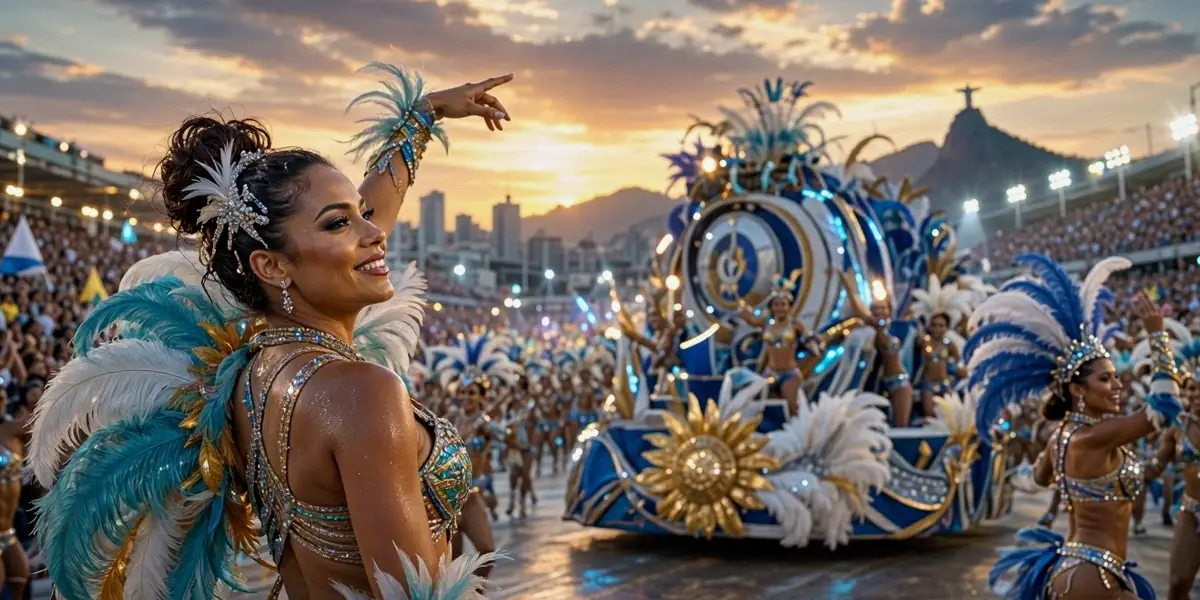
Samba-Enredo: The Song Behind the Parade
The bateria thunders into life, the puxador lifts the microphone, and then it hits — that melody every single person in the Sambadrome already knows by heart. The crowd answers the refrain before the first verse is even finished. In Rio-style carnival, no element matters more than the samba-enredo, the theme song that carries an entire samba school’s story, its floats, its fantasias and its 65 minutes of parade. Get the song right and the school soars. Get it wrong and the judges’ scorecards will show it. So what exactly makes this one song so powerful?
What Is a Samba-Enredo?
A samba-enredo is the narrative theme song of a Rio-style carnival parade. Each escola de samba chooses one enredo — a story, a historical figure, a place, a social theme — and the samba-enredo tells that story in verse. Everything the school presents on parade night flows from it: the allegorical floats, the costumes, the choreography, the order of the alas (wings of dancers). The song is the thread that stitches thousands of performers into one coherent spectacle.
The Storytelling Heart of the Parade
Think of the enredo as the script and the samba as its soundtrack. If the enredo is about the Amazon rainforest, you’ll see rainforest floats, indigenous-inspired fantasias and verses about rivers and trees. The samba-enredo compresses that entire narrative into a few minutes of music that repeats, builds and swells across the parade. It’s the reason a complete stranger in the stands can understand what a school is saying without reading a program.
How It Differs from Other Samba Styles
Samba-enredo is built for a stadium, not a living room. Compare it to other forms:
- Samba de roda: intimate, circular, rooted in Bahian tradition — built for small gatherings, not 70,000 spectators.
- Pagode: relaxed, romantic, often sung around a table with cavaquinho and tantã.
- Bossa nova: soft, jazzy and understated — the opposite of a parade anthem.
- Samba-enredo: big, anthemic and repetitive by design, so a crowd of thousands can sing it back after hearing it only a handful of times.
How a Samba-Enredo Is Born
Months before carnival, a samba school’s composers get to work. Rio de Janeiro’s Sambadrome (the Sapucaí) hosts the main samba school parades each carnival, and the competition to write the song that will be sung there is almost as fierce as the parade itself. A school’s enredo is chosen through a competitive composers’ contest before the parade — and in the top divisions, that contest can run for weeks with public eliminations.
The Composers’ Competition
Typically, several composer teams — often called parcerias — submit complete sambas for the same enredo. The school then stages a series of elimination nights, where each samba is performed live by the school’s own singers and bateria. Members and supporters vote, and the field narrows round by round until one samba remains. In Rio’s elite Grupo Especial, these finals draw packed quadras and huge online audiences. The winning team earns the right to hear their song performed at the Sapucaí — and the losing teams often wait a full year for another shot.
Judging Criteria: Melody, Lyrics and Fit
What separates a winning samba from a near-miss? Judges and school members weigh up:
- Melody: Is it memorable, singable and does it build? The refrain must stick after one listen.
- Lyrics: Do the verses tell the enredo accurately, with poetic strength and correct Portuguese?
- Fit with the enredo: Does the samba match the school’s visual concept, floats and fantasias?
- Parade practicality: Can the bateria drive it for 65 minutes without it dragging or exhausting the singers?
The Anatomy of a Samba-Enredo
Strip a samba-enredo down and you find a very deliberate machine. It’s engineered for participation — the whole point is that the crowd becomes part of the performance.
Puxador, Coro and Call-and-Response
The puxador leads the samba-enredo while the coro and crowd respond in call-and-response. The puxador (literally “the puller”) is the lead voice at the front of the school, backed by a team of singers on the sound car. The puxador sings a line; the coro — and eventually the entire Sambadrome — sings it back. This structure is why carnival songs feel like football chants: they’re designed to be answered.
Instruments That Drive the Enredo
The bateria is the engine room, and each instrument has a job:
- Surdo: the deep bass drums that mark the heartbeat of the samba — the pulse everything else locks onto.
- Cuíca: the friction drum that produces that famous squeaky, monkey-like cry, adding colour and humour.
- Tamborim: sharp, high patterns that cut through the wall of sound.
- Repinique: the leader’s drum, used for calls and breaks.
- Cavaquinho and violão: the string voices that carry harmony and melody.
Samba-Enredo in the Parade and the Sapucaí
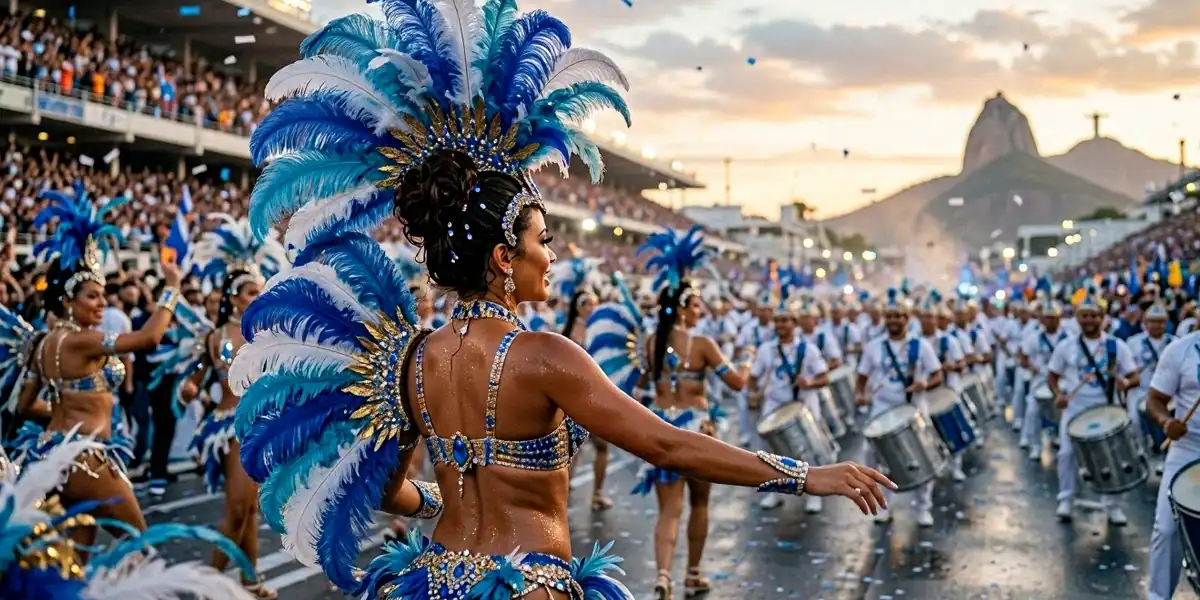
On parade night, each school has roughly 65 minutes to cross the Sapucaí. The samba-enredo is repeated continuously throughout — verse, refrain, verse, refrain — with the bateria varying its intensity to match what’s happening on the runway. A float arrives, the repinique fires a break, the crowd roars the refrain back. The song is the clock and the glue at the same time.
Timing, Repetition and the Refrain
The refrain (refrão) is repeated far more often than the verses, because that’s the part everyone can sing. Directors on the sound car watch the clock and signal the puxador to stretch or trim sections so the school finishes exactly on time. Overrun and you lose points; rush and the parade feels thin.
How the Bateria and Passistas Lock In
The passistas — the school’s lead dancers — build their footwork directly on the surdo pulse, so the batter of their feet lands with the drums. When the bateria speeds up or drops to a whisper, the dancers respond instantly. That synchronisation between drums, voices and bodies is what makes a great parade feel like one living organism rather than 3,000 separate people.
Learning Samba-Enredo in Brisbane
You don’t need a plane ticket to Rio to experience this. Brisbane’s Brazilian carnival scene includes samba schools and batucada groups performing at events like the Brisbane Festival, and our team is part of that growing community.
What We Teach in Our Samba Classes
In our batucada sessions, we break down the instruments that power a samba-enredo — surdo, tamborim, repinique, caixa and more — and teach you the patterns behind classic enredo grooves. Samba dance classes in Brisbane often teach the passo and enredo choreography for carnival performances, so dancers learn how to move with the bateria rather than simply in front of it. We also work on the songs themselves: the refrains, the call-and-response, and how to sing a samba-enredo with the energy it deserves.
Where to Experience Brazilian Carnival in Australia
Across the year, you can catch Brazilian carnival culture at community festivals, cultural events and major stages such as the Brisbane Festival. These performances are the closest thing to the Sapucaí you’ll find in Queensland — and they’re a great first step before joining a class or a parade group yourself.
FAQ
What does samba-enredo mean?
Samba-enredo literally means “samba of the theme” — it’s the narrative theme song that a samba school performs during its carnival parade, telling the story of that year’s enredo through lyrics and melody.
Who sings the samba-enredo during the parade?
The puxador leads the samba-enredo while the coro and crowd respond in call-and-response. The puxador stands at the front of the school on the sound car, supported by a team of backing singers.
How is a samba-enredo chosen?
A samba school’s enredo is chosen through a competitive composers’ contest before the parade. Multiple composer teams submit sambas for the same theme, and elimination rounds decide the winner.
Can I learn samba-enredo in Brisbane?
Yes. Our Brisbane samba school teaches enredo-style songs in batucada and samba dance classes, covering the instruments, the passo and the call-and-response singing style used in carnival parades.
Where are the biggest samba school parades held?
Rio de Janeiro’s Sambadrome (the Sapucaí) hosts the main samba school parades each carnival, with the elite Grupo Especial schools performing over two nights.
The samba-enredo is more than a song — it’s the living script of carnival, the melody that turns thousands of performers and a stadium full of strangers into one voice. Whether you want to play the surdo, learn the passo or sing a refrain at full volume, our Brisbane team invites you to learn it with us and carry a piece of Brazilian carnival into your own life.