Brazilian Festivals in Australia: Where to Find Samba, Carnival and Batucada
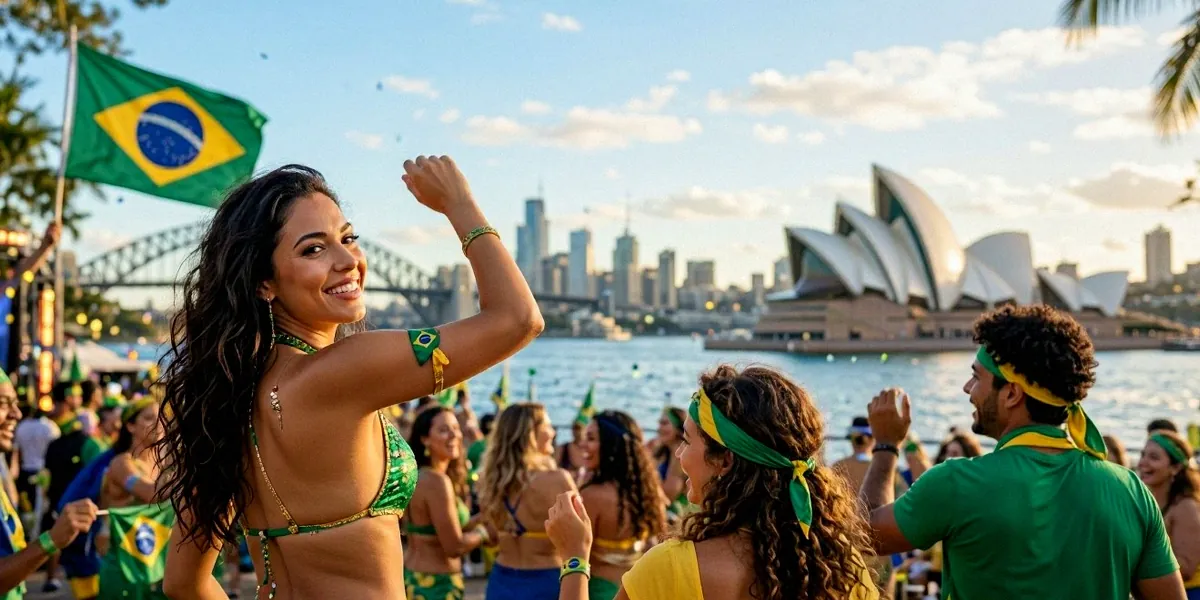
The drums hit first — a wall of surdo bass, caixa snares and tamborim clicks that you feel in your chest before you see anything. Then come the feathers, the sequins, the glittering passistas dancing in formation, and the smell of grilled skewers drifting over a crowd that’s clapping in time. It could be Rio de Janeiro in February, but it’s actually a summer Saturday in Sydney, Melbourne or Brisbane. Brazilian festival culture has well and truly landed in Australia, and it’s growing every year. So where do you go to find authentic samba, carnival and batucada drumming in this country? We’ve put together this guide to help you find it, wherever you live.
Why Brazilian Culture Thrives in Australia
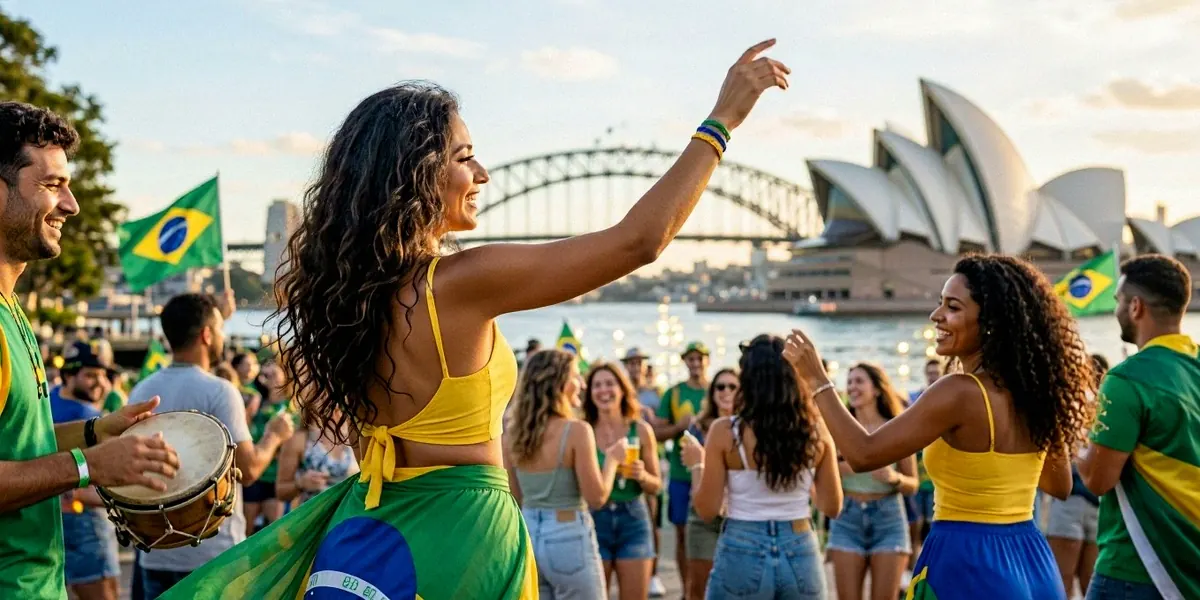
Australia is home to tens of thousands of Brazilian-born residents, with the largest communities concentrated in Sydney, Melbourne, Brisbane and the Gold Coast. Add students, skilled migrants, dual citizens and plenty of Aussies who simply fell in love with Brazilian music and dance, and you have a cultural scene with real momentum. Festivals are how that community stays connected — and how everyone else gets to join in.
From Brazil to the Southern Hemisphere
Brazilian migration to Australia grew steadily through the 2000s and 2010s, and with it came the traditions people didn’t want to leave behind: feijoada on weekends, pagode and forró at parties, and carnival as the highlight of the year. Because Brazil’s carnival falls in February — right in the middle of the Australian summer — the timing works beautifully for outdoor parades, beach events and street parties here.
How Samba Schools Build Community
A samba school is much more than a dance troupe. It’s a year-round community built around percussion, choreography, costume-making and performance. Members learn to play instruments like the surdo, repinique and agogô, rehearse weekly, and build floats and fantasias together. For Brazilians in Australia, it’s a piece of home. For everyone else, it’s an open door into one of the world’s most joyful cultural traditions.
The Biggest Brazilian Festivals Across Australia
Every mainland state now has some form of Brazilian celebration, from large-scale carnival parades to smaller community festivals. Here’s a state-by-state look at what’s out there.
Sydney and New South Wales
Sydney has the longest-running and largest Brazilian festival scene in the country. Sydney’s Brazil Carnival brings together samba schools, live bands and thousands of revellers for a full day and night of parades and music. Beyond carnival, you’ll find Brazilian-themed events around Darling Harbour, Bondi and the Inner West, plus regular rodas de samba in pubs and community halls.
Melbourne and Victoria
Melbourne’s Brazilian festival scene is known for its food and music culture. Events like the Melbourne Brazilian Festival and various carnival parties across the CBD and inner suburbs draw big crowds, with capoeira circles, churrasco stalls and batucada groups performing throughout the year. The city’s live music venues also host Brazilian nights regularly.
Brisbane and Queensland
Brisbane’s growing carnival celebrations have become one of the city’s most colourful summer events, with samba parades, drumming circles and family-friendly programming. The Gold Coast adds beachside Brazilian parties and carnival events of its own. If you’re in South East Queensland, you’re never far from a batucada drumming session or a samba dance class.
Perth, Adelaide and Beyond
Perth’s Brazilian community puts on vibrant carnival celebrations and food festivals, while Adelaide hosts Brazilian nights and cultural events through community associations and university groups. Smaller cities and regional towns often see Brazilian performances at multicultural festivals, which is a great entry point if you’re outside the major capitals.
What to Expect at a Brazilian Carnival Festival
If you’ve never been to a Brazilian carnival event in Australia, here’s what a typical day looks like — loud, colourful and impossible to stand still through.
Parades, Passistas and Fantasias
The parade is the centrepiece. Samba schools march in formation, led by passistas — the featured dancers — wearing elaborate fantasias with feathers, beads and sequins. Expect choreographed routines, drum sections keeping the tempo, and plenty of audience participation once the music starts.
Batucada Drumming and Live Music
Batucada drumming is the heartbeat of any carnival. A bateria (drum section) can range from a dozen players to more than fifty, driving the parade with layered rhythms. Between parade sets, you’ll often hear live samba, bossa nova, MPB and forró from local bands and DJs.
Food, Drink and Market Stalls
Come hungry. Most festivals feature:
- Feijoada — Brazil’s iconic black bean and pork stew, served with rice, farofa and orange slices
- Pão de queijo — warm cheese bread that sells out fast
- Coxinhas, pastéis and churrasco skewers
- Caipirinhas made with cachaça, lime and sugar
- Açaí bowls, guaraná and Brazilian coffee
Most events are family-friendly, with kids’ activities, dance workshops and craft stalls running alongside the main stage.
Samba Schools and Dance Classes in Australia
You don’t have to be Brazilian to join a samba school — you just have to show up. Across Australia, schools and community groups welcome complete beginners, and many members had never danced or played percussion before their first rehearsal.
Finding a Samba School Brisbane
If you’re searching for a samba school Brisbane based, you’ll find groups offering weekly rehearsals, performance opportunities and carnival preparation. A good samba school Brisbane option will teach you both dance and percussion, and will perform at local festivals, community events and private functions throughout the year.
Samba Dance Classes for All Levels
Samba dance classes typically run in streams for beginners, intermediate and advanced dancers. Beginners focus on footwork, hip movement, posture and samba no pé basics. More experienced dancers move into passista technique, choreography and stage performance. Classes are usually one to two hours, once or twice a week.
Joining a Batucada Group
Batucada groups are always looking for new players. You’ll start on a foundational instrument like the surdo or chocalho, learn the signature breaks and calls, and gradually work up to faster instruments like the repinique and tamborim. No prior music training is needed — just rhythm, consistency and a willingness to rehearse.
How to Get Involved with Brazilian Carnival Culture
Getting involved is easier than most people think. Here’s how to go from spectator to participant.
Attending Your First Festival
Check event listings in your city a few weeks ahead, arrive early to get a good spot near the parade route, and wear comfortable shoes. Bring cash for food stalls, sunscreen for summer events, and don’t be shy about joining the dancing at the end of the night.
Learning Samba and Percussion
Sign up for a beginner samba dance class or a batucada drumming workshop. Most schools offer a trial session so you can see if it suits you. Practise at home with recordings, and be patient — samba rhythms take time to feel natural in your body.
Connecting with the Community
Follow local samba schools and Brazilian community groups on social media to hear about rehearsals, pop-up performances and festival dates. Learning a little Portuguese goes a long way too — even basic greetings will earn you warm smiles. Volunteering at a festival is another great way in, whether you’re helping with setup, costumes or the drum section.
Planning Your Brazilian Festival Calendar
Brazilian events in Australia follow a fairly predictable rhythm, so you can plan your year around them.
Summer and Carnival Season
The biggest events cluster between December and March, aligning with Brazil’s carnival in February. This is peak season for parades, beach parties and outdoor batucada performances. Book accommodation early if you’re travelling interstate for a major carnival.
Year-Round Events and Workshops
Outside summer, you’ll still find weekly samba classes, drumming rehearsals, Brazilian film nights, forró socials and food festivals. Many samba schools use the quieter months to build costumes and learn new choreography for the next carnival season.
FAQ
Do I need to speak Portuguese to join a samba school in Australia?
No. Most samba schools in Australia run rehearsals in English, and many members don’t speak Portuguese at all. A few words here and there help you connect with the community, but they’re not required to dance or play.
Can complete beginners join a batucada drumming group?
Absolutely. Batucada groups expect new members to start with no experience. You’ll be taught the basic patterns on a foundational instrument first and gradually move to more complex parts as your timing develops.
When is the best time of year to attend a Brazilian carnival in Australia?
February is the peak, matching Brazil’s carnival, but major events run from December through March. Sydney’s Brazil Carnival and Brisbane’s carnival celebrations are both highlights of the summer season.
What should I wear to a Brazilian festival?
Light, comfortable clothing and flat shoes you can dance in. If you’re performing with a samba school, you’ll be given a costume or told what to wear. For spectators, bright colours are always welcome.
How do I find a samba school Brisbane near me?
Search for local samba schools and Brazilian community groups online, follow them on social media, and check event listings for Brisbane and the Gold Coast. Most schools welcome visitors to a rehearsal before you commit to joining.
Brazilian festival culture in Australia is loud, warm and genuinely open to everyone — whether you want to dance in a parade, play in a bateria or just eat feijoada while the drums roll past. If you’re in Brisbane or South East Queensland, we’d love you to join our samba community. Come to a rehearsal, try a class, pick up an instrument, and find out why samba has a way of pulling people in for life.