
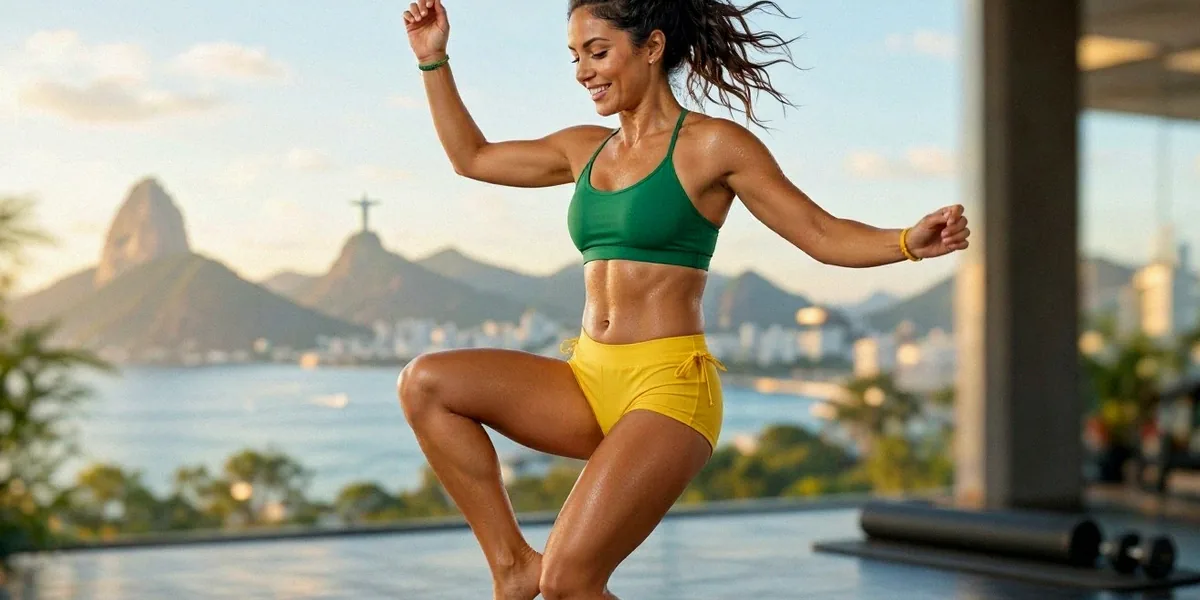
Samba as a Workout: The Full-Body Cardio You Didn’t Know You Needed
The first time we walked into a samba class in Brisbane, we thought we were signing up for a bit of fun. Ten minutes in, sweat was dripping off our foreheads, our calves were burning, and a wall of batucada drums was thundering through the room. We looked at each other and laughed — who knew a dance could feel this much like a gym session? That night changed how we thought about fitness. Samba isn’t just movement set to music; it’s a full-body workout disguised as a party, and once you’ve tried it, the treadmill rarely looks the same again.
Why Samba Is a Serious Full-Body Workout
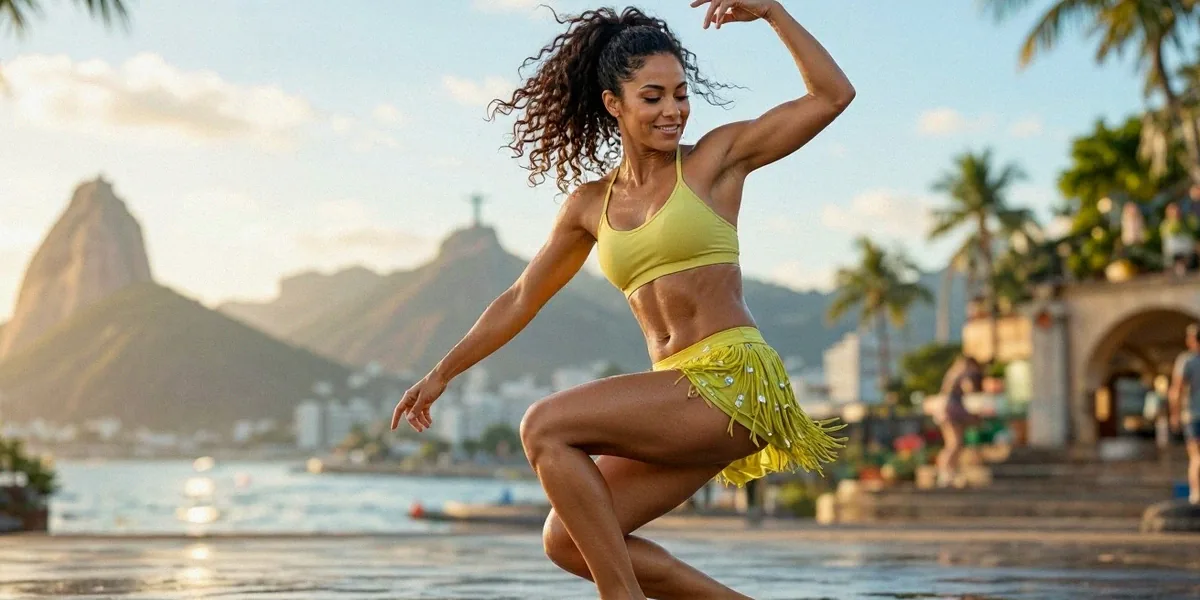
Samba works almost every major muscle group at once, and it does it without you noticing. The constant hip rotation engages your obliques and lower back. The rapid footwork fires up your calves, quads, and glutes. Your arms swing and counterbalance, working the shoulders and upper back. Meanwhile, your core is switched on the entire time just to keep you upright and balanced. There’s no sitting down between sets — the rhythm keeps you moving.
In a 60-minute session, most dancers burn somewhere between 400 and 600 calories, depending on intensity, body weight, and how much you throw yourself into the batucada. That puts samba in the same territory as running, spin class, or a solid HIIT session — except you’re smiling the whole way through.
Muscles You Didn’t Know You Were Working
Newcomers are often surprised by where they feel it the next day. The usual suspects — glutes, hamstrings, calves — show up, but so do the deeper stabilisers most gym routines ignore.
- Core and obliques: every hip rotation is a mini crunch for your waistline.
- Glutes and hip flexors: samba’s signature bounce and step patterns load these hard.
- Calves and ankles: rapid weight transfers build serious lower-leg endurance.
- Shoulders and upper back: arm styling keeps them engaged for the full track.
- Pelvic floor and deep stabilisers: rarely trained elsewhere, constantly used in samba.
Calories Burned: Samba vs. Running vs. Zumba
Putting numbers side by side helps. A 70kg dancer doing a moderately intense samba class burns roughly 450–550 calories an hour. A 10km/h run burns around 600. A typical Zumba class sits near 400–500. Samba lands right in the middle — and unlike running, it trains coordination, rhythm, and mobility at the same time. You’re not just burning energy; you’re building body awareness.
The Role of Batucada: Drumming Up Your Heart Rate
Here’s what separates samba from a playlist at the gym: the batucada. Live drumming doesn’t just accompany the dance — it drives it. When the tempo lifts, your body follows, whether you planned to or not. Our Unidos de Brisbane bateria plays a full percussion ensemble, and the energy in the room shifts the moment the drums start. You can’t half-commit when a surdo is pounding behind you.
How Live Drumming Affects Your Workout Intensity
Research on group exercise consistently shows that live music pushes participants harder than recorded tracks. Tempo dictates step rate, and step rate dictates heart rate. A batucada that builds from a steady 100 beats per minute into a driving 130-plus forces dancers into sustained cardio without them consciously deciding to go harder. It’s interval training you don’t have to plan.
Bateria Instruments That Keep You Moving
The Unidos de Brisbane bateria uses the same core instruments you’d hear in Rio. Each one shapes the workout in its own way:
- Surdo: the deep bass drum that marks the heartbeat — your anchor for weight shifts and bounce.
- Repinique: sharp, high-pitched calls that cue transitions and push the tempo.
- Tamborim: fast, intricate patterns that demand quick footwork and precise timing.
- Caixa and agogô: the shimmer and swing that fill out the groove and keep the energy high.
When the repinique signals a break and the tamborim kicks back in, you feel it in your chest before your brain registers it. That’s the moment most people realise they’ve stopped thinking about exercise entirely.
Samba Dance Classes in Brisbane: What to Expect
A typical samba class in Brisbane runs for 60 to 90 minutes and follows a structure that keeps beginners safe and regulars challenged. We start with a warm-up that mobilises hips, ankles, and spine. Then come technique drills — the samba step, the bounce, the traveller — broken down slowly before being sped up. Choreography comes next, usually built around a short sequence you’ll repeat until it sticks. We finish with a cool-down and stretch, and often a chat that runs longer than planned.
Our Unidos de Brisbane beginner-friendly sessions run in West End and Fortitude Valley, and we keep the atmosphere deliberately low-pressure. No mirrors full of judging eyes, no pressure to nail it on day one.
Beginner vs. Advanced: Finding Your Pace
Most schools stream classes by experience. Beginner classes focus on the foundational samba no pé step, basic hip action, and getting comfortable with the rhythm. Advanced classes layer in faster footwork, partner work, and performance choreography for carnival. If you’re unsure, start at beginner — you’ll progress faster than you think, and you’ll avoid the knee and ankle niggles that come from jumping ahead.
What to Bring to Your First Class
- A water bottle — you’ll need more than you expect.
- Comfortable workout clothes you can move and sweat in.
- Supportive trainers with a bit of grip (heels are for performances only).
- A small towel.
- An open mind and zero expectation of getting it perfect.
Brazilian Carnival Culture Meets Fitness
Samba was never designed as exercise. It grew out of Afro-Brazilian communities in Rio de Janeiro and became the heartbeat of Brazilian carnival — a celebration of rhythm, resistance, and community. When you train samba, you’re not just moving your body; you’re stepping into a tradition that’s centuries old and still evolving.
That cultural context matters for fitness. People stick with samba because it feels like a party, not a punishment. And in Australia, that spirit is alive and growing.
From Rio to Brisbane: Carnival Traditions
Rio Carnival draws millions every year, with samba schools parading through the Sambadrome in costumes that take months to build. Brisbane has its own version of that energy. The Brisbane Brazilian Carnival brings together dancers, drummers, and food stalls for a day of full-on Brazilian culture. Our school is proud to be part of that scene, and we see the same joy in a West End rehearsal room that you’d find in a Rio parade — just with better air conditioning.
How Parade Rehearsals Double as Bootcamp
Carnival rehearsals are where the workout gets serious. Two-hour sessions of repeated choreography, constant bouncing, and full-speed run-throughs will humble anyone. By the time parade day arrives, our dancers are fitter than they’ve ever been — not because they trained for fitness, but because they trained for carnival. The fitness is a side effect. A very sweaty, very welcome side effect.
Injury Prevention and Recovery for Samba Dancers
Samba is high-impact and repetitive, so looking after your body matters. The most common issues we see are knee strain from repeated samba steps, ankle rolls from quick direction changes, and lower-back tightness from over-rotating the hips before the core is strong enough to support it. The good news: most of these are preventable.
Our instructors in Brisbane coach technique over speed, every time. If your samba step is sloppy at full tempo, we slow it down. Speed without control is how people get hurt — and how they stop enjoying class.
Warm-Up and Cool-Down Essentials
- Five minutes of hip circles, ankle rolls, and spinal mobility before class.
- Dynamic leg swings and light bouncing to wake up the calves and hamstrings.
- Post-class static stretches for quads, hamstrings, calves, and hip flexors.
- Hydrate before, during, and after — samba sweat loss is real.
- Wear trainers with proper cushioning; fashion over function is a fast track to injury.
When to Rest and When to Push
Muscle soreness after a new class is normal. Sharp pain, joint swelling, or pain that lingers more than a few days isn’t. Rest when your body asks for it. Push when you’re tired but stable. Samba rewards consistency far more than heroics — three classes a week for a year will transform your fitness more than one brutal session followed by two weeks off.
Why We Think Samba Beats the Gym
We’re biased, obviously. But after years of running Unidos de Brisbane and watching hundreds of people walk through our doors, we’ve seen something gyms rarely produce: people who keep coming back. Not because they feel guilty, but because they genuinely look forward to it.
Samba gives you three things a treadmill can’t. Community — you train alongside people who become friends. Joy — the endorphins hit harder when you’re laughing. And accountability — your bateria and your fellow dancers notice when you’re not there.
Community, Endorphins, and Accountability
When you dance in a group with live drums, you’re syncing with other humans. That shared rhythm triggers oxytocin and endorphins in a way solo workouts don’t. Add the social layer — the post-class chats, the carnival prep, the shared goals — and you’ve got a fitness habit that actually sticks.
Try a Free Samba Class in Brisbane
We run free beginner sessions in West End and Fortitude Valley for anyone curious about samba. No experience needed, no partner required, no pressure. Just bring water, wear something you can move in, and show up. You’ll sweat, you’ll laugh, and you’ll probably wonder why you didn’t start sooner.
Frequently Asked Questions
Do I need any dance experience to start samba classes in Brisbane?
No. Our beginner sessions assume zero dance background. We teach the basic samba step from scratch, and most people feel comfortable within two or three classes.
How many calories does a samba class actually burn?
Most dancers burn between 400 and 600 calories in a 60-minute session, depending on intensity and body weight. It’s comparable to running or spin class, but with far more variety in movement.
What should I wear to my first samba class?
Comfortable workout clothes and supportive trainers with grip. Leave the heels for performances. Bring a water bottle and a towel — you’ll sweat more than you expect.
Is samba hard on the knees?
Not when taught properly. Knee strain usually comes from rushing technique. Our instructors prioritise control and correct form before speed, which keeps joints safe.
Can I join Unidos de Brisbane if I want to perform at carnival?
Absolutely. Many of our dancers start in beginner classes and progress to parade performances at the Brisbane Brazilian Carnival within a year. Rehearsals double as serious fitness training.
Samba isn’t just exercise — it’s a joyful, cultural, and community-driven way to get fit. Whether you’re chasing a new workout, a connection to Brazilian carnival culture, or simply a reason to look forward to Monday nights, there’s a place for you in a Brisbane samba school. Come try a class, feel the drums, and let the rhythm do the rest.