
Samba no Pé: First Steps for Beginners
You’re standing at a Brisbane festival, maybe near the river at South Bank, and then it hits you: a wall of drums. The batucada starts, the surdo pounds out that deep heartbeat, the caixas crack and rattle, and before you know it your shoulders are moving. Your feet want in on the action, but they’re not sure where to go. That moment — the itch to dance but no idea how — is exactly where every sambista starts. In this guide, we’ll walk you through the first steps of samba no pé, the solo footwork at the heart of Brazilian carnival, and show you how to take those first moves from your living room to the street.
What Is Samba no Pé and Why It Matters
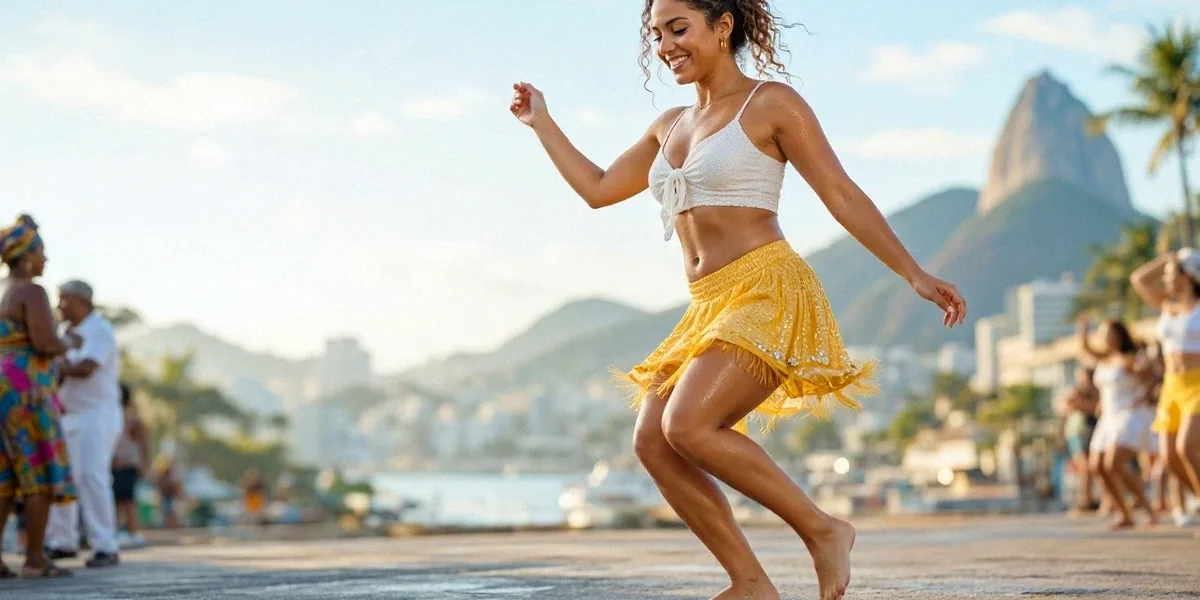
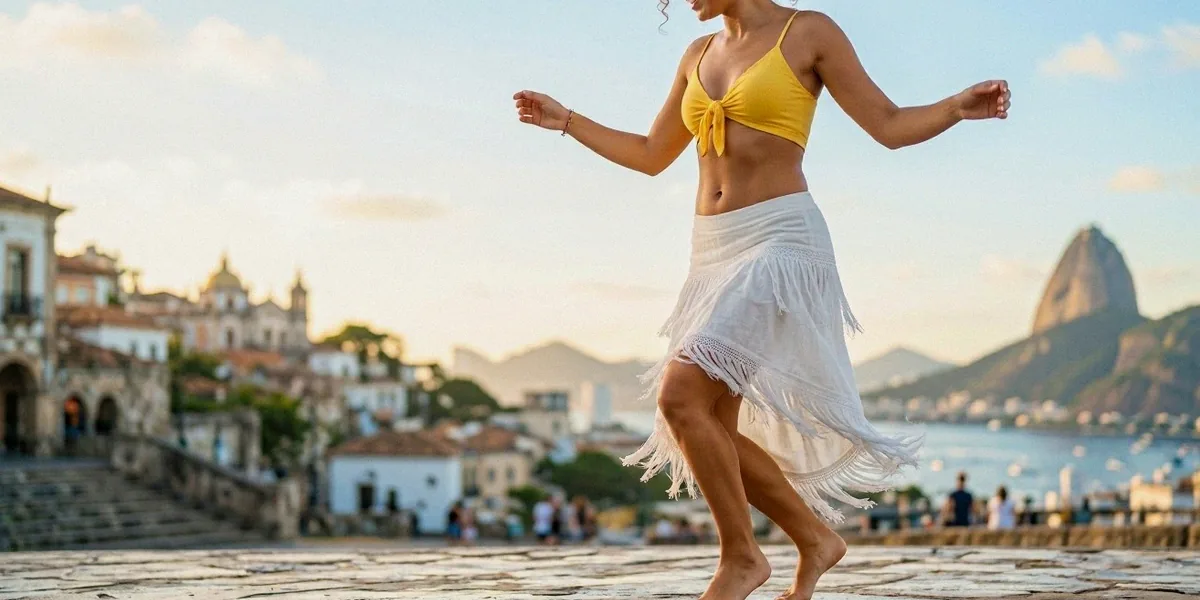
Samba no pé literally means “samba in the foot,” and that’s the best description you’ll get. It’s the improvised solo style you see when a passista dances alone in front of a parade crowd, feet flying, hips working, whole body riding the rhythm. It’s not a partner dance like samba de gafieira or samba rock — there’s no one to lead or follow. It’s just you, the drums, and whatever your body wants to say.
The style grew out of the Afro-Brazilian communities of Rio de Janeiro and became the signature solo language of carnival parades. When you watch the Rio parade on screen, the dancers at the front of each wing are doing samba no pé. Here at our samba school Brisbane, it’s the foundation of everything we teach and perform — from small community events to full carnival parades.
The Rhythm Behind the Steps
Samba no pé rides on a 2/4 feel, with the emphasis landing in a way that keeps you constantly moving. In a batucada, the surdo marks the pulse while the caixa, agogô and repinique fill in the syncopation. Your feet lock onto that pulse, but your hips and upper body answer the offbeats. That’s why the dance looks so alive — it’s a conversation between your lower body and the rhythm section.
Samba no Pé vs. Other Samba Styles
Brazil has dozens of samba styles, and beginners often confuse them. A quick guide:
- Samba no pé — solo, improvised, carnival footwork. The style in this article.
- Samba de gafieira — partner dance, elegant, close embrace, ballroom-influenced.
- Samba rock — partner dance with a bouncier, more playful feel.
- Samba de roda — circle-based, rooted in Bahia, often with call-and-response singing.
You can learn them all eventually, but if you want to dance in a carnival parade, samba no pé is where you start.
Getting Your Body Ready: Posture and Basic Bounce
Before any footwork, your body needs a home base. Samba no pé looks wild, but it’s built on a stable, grounded posture. Get this wrong and you’ll be exhausted in two minutes; get it right and you can dance for an hour.
Finding Your Base and Balance
Stand with feet roughly hip-width apart, knees soft (never locked), spine tall but relaxed. Your weight should sit slightly forward on the balls of your feet, not on your heels. Shoulders stay down and loose — think of them as floating, not held. In our samba dance classes, the most common beginner mistake we see is locking the knees and leaning back. That kills your bounce and your balance at the same time. We correct it by having students shift weight gently side to side until they feel where their centre actually is.
The Samba Bounce: Small but Constant
The bounce is the engine of samba no pé. It’s not a jump; it’s a small, continuous up-and-down driven by the knees and ankles, with the hips following naturally. The trick is to keep it tiny. Beginners often overdo it, bouncing like they’re on a trampoline, which throws off timing and looks frantic. Our teachers tell students to imagine the bounce is happening underneath them, not through them — the feet stay close to the floor and the movement stays quiet. Once the bounce is constant, everything else — footwork, hip action, arm styling — has something to sit on.
Your First Footwork Patterns
Once you’ve got posture and bounce, you’re ready to move. The good news: samba no pé’s basic step is simpler than it looks. The challenge is timing, not complexity.
The Basic Step: Front, Side, Back, Side
The foundational pattern is a four-count cycle: front, side, back, side. Step forward with your right foot, then to the side, then back, then to the side again, and repeat with the left. Each step lands on the pulse of the batucada. Your weight transfers fully onto each foot as it lands, then pushes off into the next step. The movement stays low and grounded — no high kicks, no big leaps. Practise slowly to a samba track at half tempo before you ever try it with a live batucada. Live drums are fast; if you haven’t built the pattern at slow speed, you’ll panic and lose it.
Adding Hip Action Without Losing Balance
Hips are where samba gets its signature, but they’re also where beginners lose their balance. The key is that hip movement comes from the weight transfer, not from forcing your pelvis around. When you step onto your right foot, the right hip naturally rises and the left drops. Let that happen. Don’t add extra swivel on top. In our classes, we often have students dance with hands on their hips so they can feel the natural motion instead of manufacturing it. Once the weight transfer is clean, the hips take care of themselves.
Where to Learn in Brisbane: Classes and Community
You can learn a lot from videos, but samba is a communal dance. Learning with other people, to live drums, in a room that smells like sweat and enthusiasm — that’s where it clicks.
Choosing the Right Samba Dance Classes
Our samba school Brisbane runs regular samba dance classes for absolute beginners through to performance level. Look for classes that teach samba no pé specifically, not just Brazilian fitness or partner styles. A good beginner class will spend time on posture, bounce and the basic step before throwing choreography at you. We also run workshops at venues like the Brisbane Powerhouse, where you can try a session without committing to a full term.
Joining a Batucada for Live Rhythm
There’s nothing like dancing to live drums. Brisbane has a growing batucada scene, and our team regularly plays at South Bank and community festivals around the city. Even if you’re not ready to perform, come and watch, listen, and let your feet absorb the tempo. Many of our students say the moment samba clicked was the first time they danced in front of a real bateria rather than a speaker.
Practice Tips and Common Pitfalls for Beginners
Progress in samba no pé comes from smart, regular practice — not marathon sessions. Here’s what works.
Building Muscle Memory
Practise barefoot at home so you can feel the floor and your own weight transfer. Ten minutes a day beats one hour a week. Record yourself on your phone — it’s uncomfortable at first, but you’ll spot the stiff knees and rushed timing instantly. Focus on rhythm over big movements; a small, clean step on time looks far better than a giant step that’s late.
Staying Relaxed and Musical
The two biggest beginner pitfalls are rushing the tempo and holding tension in the hips. If you’re rushing, you’re probably thinking about the next step instead of listening. Slow the track down. If your hips are stiff, you’re forcing them — go back to weight transfer and let the hips follow. Watch Brazilian carnival videos, but watch the passistas’ feet and torsos, not just the costumes. Notice how little they seem to be doing with their upper bodies compared to how much rhythm is coming out.
Your First Carnival Experience: What to Expect
Eventually, the studio isn’t enough. You’ll want to be in the parade, in the crowd, in the noise.
From Studio to Street
Dancing samba no pé in a Brazilian carnival parade in Australia is a completely different experience from class. The ground is harder, the drums are louder, the crowd is right there, and the energy is enormous. The Brisbane Brazilian Carnival is one of the biggest events on our calendar, and it’s where many of our students perform for the first time. We rehearse the choreography together, walk beginners through the parade route, and pair newer dancers with experienced ones so no one feels lost.
Costumes, Energy, and Community
Carnival costumes are heavy, sparkly, and often surprisingly hot to wear. You’ll be sweating before you take a single step. But the moment the batucada kicks in and the crowd starts cheering, none of that matters. What surprises most first-timers is the community — the other dancers looking out for you, the drummers grinning as you pass, the strangers on the sideline dancing along. It’s the reason so many people come back season after season.
FAQ
Do I need any dance experience to start samba no pé?
No. Samba no pé is built on a simple basic step and a bounce, both of which can be learned from scratch. Most of our beginner students have never danced before, and many are on the floor dancing confidently within a few weeks.
What should I wear to my first samba dance class in Brisbane?
Comfortable workout clothes and bare feet or soft dance shoes. Avoid running shoes with thick tread — they grip too much and stop you feeling the floor. Bring water and a towel; you’ll work up a sweat.
How long does it take to be ready to dance in a carnival parade?
With regular classes and a bit of home practice, many beginners are ready for a simple parade appearance within three to six months. Our team supports first-timers through rehearsals and on the day itself, so you’re never thrown in alone.
Is samba no pé only for women?
Not at all. While passistas in Rio parades are traditionally women, samba no pé is danced by everyone — men, women, and children. Our Brisbane classes and performances are open to all.
Do I need to speak Portuguese to join?
No. Our classes and rehearsals run in English, and while we use some Portuguese terms for the drums and steps, you’ll pick them up naturally as you go.
Every passista you’ve ever watched on screen started exactly where you are now — awkward, curious, and slightly off-beat. The difference is that they kept showing up. Samba no pé rewards persistence more than talent, and the joy it gives back is enormous. If you’ve felt that pull when the batucada starts, don’t leave it at the edge of the dance floor. Join our next samba dance class in Brisbane, bring your curiosity, and let your feet do the rest.