
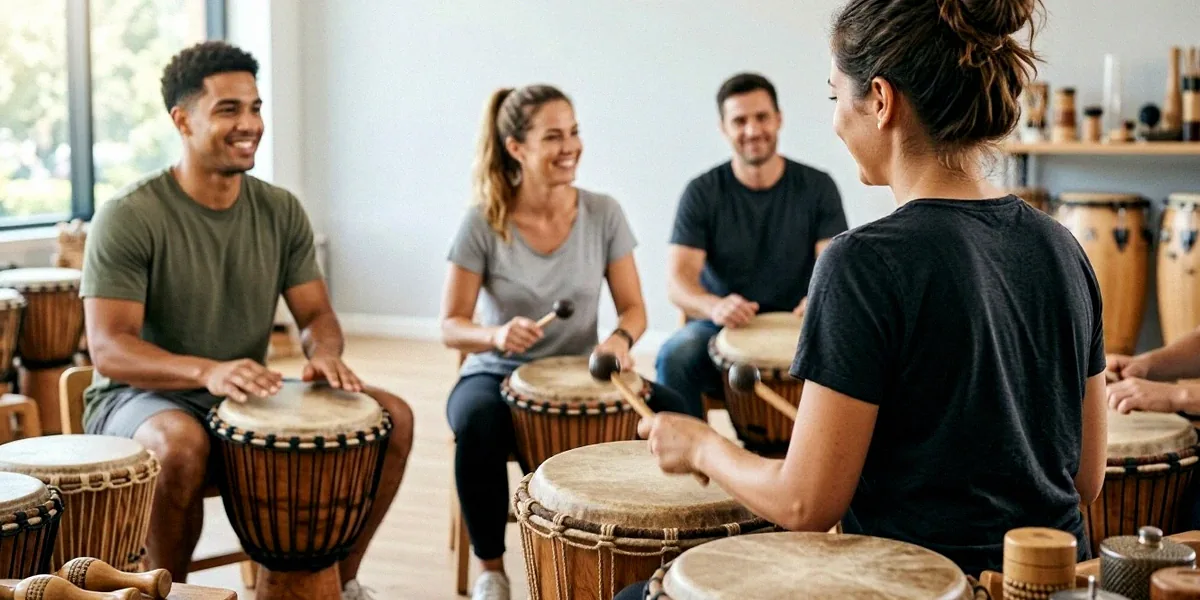
Joining a Percussion Workshop: Your First Step into Samba
Have you ever felt the irresistible pull of Brazilian carnival drums and wondered how to be part of that energy? You’re not alone. Every year, thousands of people across Brisbane hear the thunder of a batucada drifting across South Bank or the Showgrounds and think, “I want to be in the middle of that.” The good news is you don’t need to be a trained musician, you don’t need to own a single instrument, and you definitely don’t need to speak Portuguese. You just need to show up. A percussion workshop is where that journey begins.
Why a Percussion Workshop Is Your Gateway to Samba
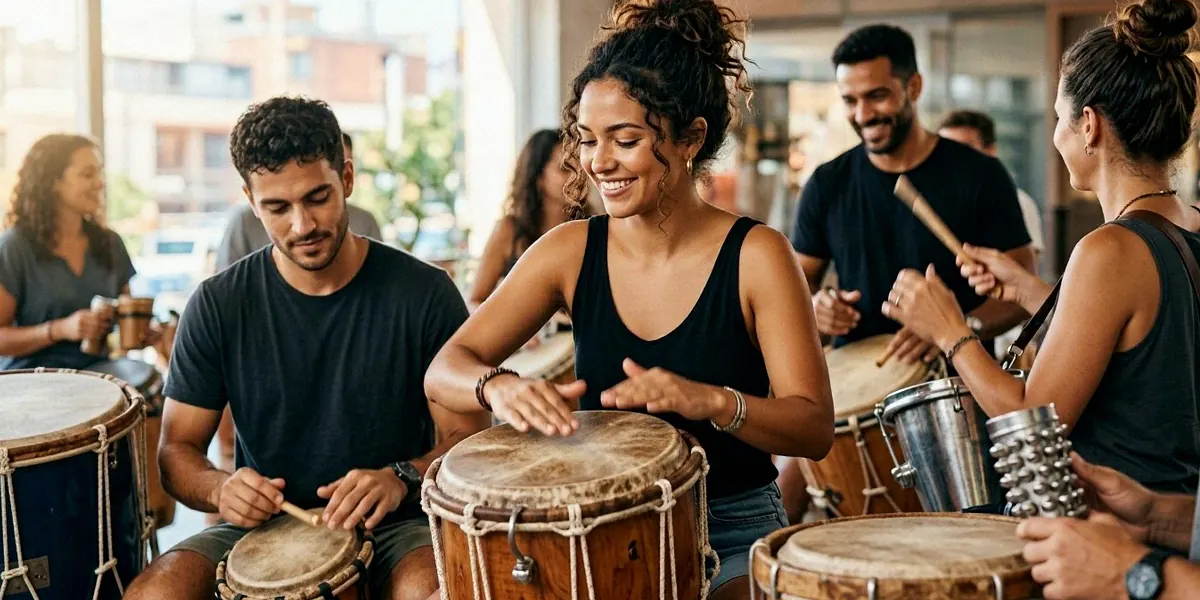
Samba looks intimidating from the outside. The rhythms are fast, the drums are loud, and the dancers make it look effortless. But here’s the secret: samba is built on patterns that anyone can learn, one layer at a time. A percussion workshop breaks those layers down for you in a relaxed, social setting. There’s no audition, no sheet music to read, and no pressure to be perfect. You learn by listening, copying, and playing alongside others — which is exactly how samba has been passed down in Brazil for generations.
At our samba school Brisbane, workshops are built around batucada — the driving, ensemble-style percussion that powers Brazilian carnival parades. We run weekly sessions in venues like the Brisbane Powerhouse and local community halls, and the atmosphere is closer to a party than a music lesson. That’s deliberate. We want you to feel the rhythm in your body before you worry about technique.
No Experience? No Problem!
Most people who walk into their first workshop have never held a surdo or a tamborim. That’s completely normal. Our instructors teach from zero, starting with simple pulse patterns and building up gradually. If you can clap in time to a song you like, you already have the foundation. We’ve had accountants, nurses, students, retirees, and parents of dancers all find their place in the bateria.
The Social Side of Drumming
What surprises newcomers most isn’t the music — it’s the people. Drumming together creates a connection that’s hard to replicate anywhere else. You’re making something loud and joyful as a group, and that shared experience builds friendships fast. Many of our members joined for the rhythm and stayed for the community.
What to Expect in a Typical Workshop
Every workshop follows a similar shape. We start with a physical and vocal warm-up to loosen your hands, wrists, and shoulders. Then we introduce the instruments one at a time, demonstrating each sound and showing you the basic pattern. From there, we split into sections, practice individually, and finally bring everything together as a full bateria. The moment when all the parts lock in for the first time is genuinely thrilling.
We provide all instruments at every session, so you can try different roles before committing to one. Most people rotate through a few instruments in their first month before finding the one that feels right.
Instruments You’ll Meet
Instruments commonly used in batucada include surdo, tamborim, agogô, caixa, and repinique. Each one plays a distinct role:
- Surdo — the deep bass drum that anchors the heartbeat of the bateria.
- Tamborim — a small, high-pitched frame drum played with a stick and rapid wrist flicks.
- Agogô — metal bells that add a shimmering, melodic layer on top.
- Caixa — a snare-style drum that provides the crisp, marching rhythm.
- Repinique — a sharp, high drum used to lead breaks and call the bateria.
From Basic Beats to Full Batucada
In your first session, you’ll likely learn one or two simple patterns on a single instrument. Within a few weeks, you’ll be playing those patterns in time with the whole group. Within a few months, you’ll be ready to perform. The progression is steady and designed so nobody gets left behind.
Finding the Right Samba School in Brisbane
Brisbane’s Brazilian community has grown steadily, and there are now several groups offering percussion and dance. When you’re choosing where to learn, look for experienced instructors who can explain rhythms clearly, an inclusive culture where beginners aren’t sidelined, and real performance opportunities — because playing live is where samba truly comes alive.
Our school runs regular workshops and events around Brisbane, from community festivals to cultural showcases. We also maintain strong connections to Brazilian carnival traditions, which means you’re learning authentic rhythms rather than a watered-down version.
Questions to Ask Before You Join
- Do you provide instruments, or do I need to buy my own?
- How do you handle complete beginners in a mixed-level group?
- Are there performance opportunities, and how soon can new members take part?
- What styles of samba do you teach — batucada, samba-enredo, or others?
- Is there a pathway into samba dance classes as well?
Red Flags to Avoid
Be cautious of groups that pressure you into expensive instrument purchases before your first session, or that treat beginners as spectators rather than participants. A good samba school makes you feel welcome from day one and gives you a real role in the ensemble, no matter your skill level.
How Percussion Workshops Complement Samba Dance Classes
Drumming and dancing are two halves of the same tradition. When you play the rhythms, you start to understand where the steps fall. When you dance, you internalise the pulse in a way that makes playing easier. Many samba schools in Australia, including ours, offer beginner-friendly samba dance classes alongside percussion workshops — and plenty of our students do both.
Rhythm for Dancers, Movement for Drummers
Dancers who learn percussion develop sharper timing and a deeper feel for the music. Drummers who take dance classes find their playing becomes more expressive and relaxed. It’s a feedback loop that accelerates your progress in both directions.
Preparing for Brazilian Carnival Together
When carnival season arrives, the dancers and the bateria perform as one unit. Rehearsing together in the months beforehand is what makes that possible. If you want the full carnival experience, learning both disciplines is the fastest route there.
Tips for Your First Workshop
Your first session is about getting comfortable, not getting it perfect. Here’s how to make the most of it.
What to Bring and Wear
- Comfortable clothing you can move in — nothing restrictive around the wrists or shoulders.
- A water bottle. You’ll be surprised how much you sweat.
- Earplugs if you’re sensitive to loud sound. The bateria gets loud, and that’s part of the fun.
- Closed shoes with a bit of grip.
Mindset for Learning Rhythms
Listen more than you play at first. Absorb the overall sound before focusing on your own part. Don’t fear mistakes — everyone makes them, including our instructors. Our team creates a supportive environment where everyone learns at their own pace, and there’s no such thing as being “too slow” in a samba workshop.
Beyond the Workshop: Joining the Bateria and Carnival Culture
Once you’ve got a few rhythms under your belt, the next step is joining the bateria — the percussion ensemble that drives Brazilian carnival parades. This is where the real magic happens. You move from learning patterns to performing them, and you become part of a tight-knit group that rehearses, travels, and celebrates together.
From Student to Performer
Our members regularly play at Brisbane events, community festivals, and Brazilian carnival celebrations. The transition from workshop participant to performing member is gradual and supported. You’ll know when you’re ready, and so will we.
The Carnival Calendar in Brisbane
Brisbane’s Brazilian carnival events often take place at locations such as the Brisbane Showgrounds and South Bank Parklands. These are the moments we spend all year preparing for — the costumes, the choreography, the roar of the crowd. Being inside the bateria when the parade starts is an experience you’ll never forget.
FAQ
Do I need any musical experience to join a percussion workshop?
No. Our workshops are designed for complete beginners. If you can clap along to a song, you can learn samba. We teach every rhythm from scratch and provide all the instruments.
How often do you run workshops in Brisbane?
We run weekly percussion workshops at venues including the Brisbane Powerhouse and local community halls. Check our events page for current times and locations.
What is a bateria?
The term ‘bateria’ refers to the percussion ensemble that drives Brazilian carnival parades. It’s made up of instruments like the surdo, tamborim, agogô, caixa, and repinique, all playing interlocking patterns.
Can I take samba dance classes as well as percussion workshops?
Absolutely. Many of our students do both. Dancing helps you feel the rhythm, and drumming helps you understand where the steps land. The two disciplines reinforce each other.
Will I get to perform at Brazilian carnival events in Brisbane?
Yes, once you’re ready. Members of our bateria perform at Brisbane events and carnival celebrations throughout the year, including at the Brisbane Showgrounds and South Bank Parklands.
Joining a percussion workshop isn’t just about learning music — it’s about becoming part of a vibrant, supportive community that celebrates Brazilian carnival culture right here in Brisbane. You’ll make noise, make friends, and discover a side of yourself you didn’t know was there. So pick a session, bring a water bottle, and take the leap. The drums are waiting.