Latin Dance in Brisbane: Where to Start
We know exactly how it feels to stand outside a dance studio in Brisbane, peek through the window, and wonder if everyone inside already knows what they’re doing. We’ve been there. Whether you’re curious about samba, salsa, or something you can’t quite pronounce yet, this guide is our no-nonsense rundown of where to start with Latin dance in Brisbane — the styles, the suburbs, the class culture, and the small steps that actually get you through the door.
Why Latin Dance Is Booming in Brisbane
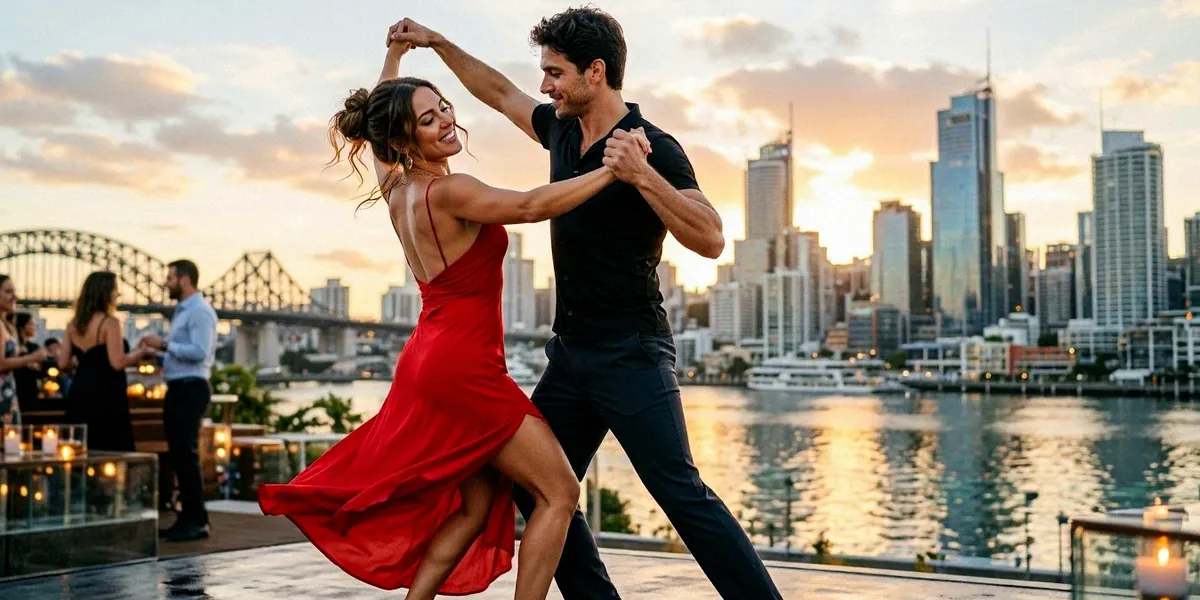
Brisbane’s dance floor has changed a lot in the past decade. What used to be a handful of salsa nights has grown into a genuinely multicultural scene, and you can feel it in the suburbs. West End and Fortitude Valley are the two key hubs for Latin dance and nightlife, with everything from casual socials in beer gardens to full-scale stage shows. South Bank and the Brisbane CBD also host regular Latin dance socials and events, which means there’s almost always something on within a train ride of wherever you live.
Part of that growth comes from Brisbane’s Brazilian community, which has been steadily building samba schools, drumming groups, and carnival crews. When a city gets a real carnival culture, people notice — and they want in.
From Salsa to Samba: A Quick Tour of Styles
If you’re new, the menu can be overwhelming. Here’s the short version of what you’ll encounter:
- Samba — fast, joyful, carnival-driven, with a strong solo tradition
- Salsa — the social dance staple, usually partner-based, with a huge local scene
- Bachata — slower and more sensual, often taught alongside salsa
- Zouk — flowing, contemporary, popular with dancers who like a softer style
- Forró — Brazilian partner dancing with a folk flavour, often played at community events
How Brazilian Carnival Culture Shapes Brisbane’s Scene
Brazilian carnival celebrations in Australia often peak around February and March, and that timing drives a lot of local interest. When a parade or a bloco hits the streets with a batucada drumming crew behind it, people sign up for classes the following week. That’s not a coincidence. Carnival gives Latin dance a visible, loud, public face in Brisbane — and it’s far less intimidating than a studio mirror.
Samba vs Salsa vs Zouk: Which Style Should You Try First?
We get asked this constantly, and our honest answer is: it depends on what kind of person you are. Here’s how we’d break it down.
Samba: The High-Energy Carnival Style
Samba is loud, fast, and physically demanding in the best way. It rewards rhythm and stamina more than technical precision at the start. If you like the idea of dancing in a group, learning choreography, and eventually performing in a carnival-style parade, samba is your lane. It’s also the style most connected to Brisbane’s Brazilian carnival culture, so you’ll get community as well as cardio.
Salsa and Bachata: The Social Dance Favourites
Salsa and bachata dominate the social dance calendar in Brisbane. They’re partner dances, which means you can walk into almost any Latin night in Fortitude Valley or the CBD and find someone to dance with. Salsa is upbeat and structured; bachata is slower and more about connection. If your goal is to have a reliable social life on Friday nights, start here.
Zouk and Forró: The Lesser-Known Gems
Zouk is smooth, flowing, and often described as dancing to the melody rather than the beat. It attracts people who came from contemporary or lyrical backgrounds. Forró is the wildcard — a Brazilian partner dance with accordion and triangle, played at community gatherings and festivals. Both have smaller scenes in Brisbane, which means you’ll get more personal attention from teachers.
What to Expect at Your First Samba Dance Class in Brisbane
Walking into your first class is the hardest part, and it takes about ten minutes to stop feeling awkward. Here’s what actually happens.
What to Wear and Bring
Wear something you can move in — leggings, shorts, a t-shirt. Bring a water bottle and a small towel. Shoes matter more than people expect: a light dance sneaker or a flat with a smooth sole works well. Avoid heavy running shoes with deep treads, because they grip the floor and make turning harder. If you’re trying a batucada session, bring earplugs. Seriously.
How Beginner Classes Are Structured
Most beginner samba classes follow a similar shape:
- A warm-up that loosens hips, knees, and ankles
- Isolation drills for hips and ribcage
- Introduction to samba no pé, the foundational solo samba step beginners learn first
- Short choreographed sequences that combine the basics
- A cool-down and a chat at the end
Samba no pé is the core of everything. It looks simple, feels awkward for a week, and then suddenly clicks. Give it time.
Do You Need a Partner?
No. Samba is largely a solo style, and most Brisbane samba schools run beginner classes without any partner requirement. Even for salsa and bachata, most schools rotate partners so nobody sits out. If you do bring a partner, that’s fine too — just expect to swap during class.
Finding the Right Samba School in Brisbane for You
Not all schools are the same, and the right fit matters more than the fanciest studio. Location is the first filter — if you’re in West End or Fortitude Valley, you’ve got options within walking distance. If you’re further out, look for schools near the CBD or South Bank so you can combine class with a train trip and dinner.
Questions to Ask Before You Enrol
- Do you offer a beginner-specific class, or do new dancers join mixed levels?
- How long is each term, and what’s the cost per class?
- Is there a performance or carnival opportunity at the end?
- Do you have a batucada group I could watch or join?
- What’s the class size on a typical weeknight?
Trial Classes and Open Days
Almost every reputable samba school in Brisbane runs a trial class or open day. Use them. One class tells you more than ten Instagram posts. Turn up, watch the warm-up, join in, and pay attention to how the teachers treat the people who are clearly struggling — that’s the real signal.
Community, Batucada and Carnival Opportunities
The best schools aren’t just dance classes. They’re communities with a drumming wing, a costume crew, and a calendar of performances. If a school has a batucada attached, that’s a strong sign it’s plugged into the wider carnival scene rather than just running weekly lessons.
Beyond the Dance Floor: Batucada and Carnival Culture
Dance is the entry point, but the culture goes further. If you stick around, you’ll end up at a drumming rehearsal or a carnival parade before you know it.
What Is Batucada?
Batucada refers to Brazilian percussion ensembles central to carnival. Think surdo bass drums, repinique, caixa snare, agogô bells, and tamborim. A batucada is loud, layered, and hypnotic, and it’s what gives carnival its heartbeat. In Brisbane, several groups run open rehearsals where beginners can learn a single instrument and play within an hour.
Brisbane’s Brazilian Carnival Calendar
Brazilian carnival celebrations in Australia often peak around February and March, aligning roughly with the Brazilian summer. Brisbane’s events range from small community blocos to larger staged performances, often held in parks, cultural centres, and inner-city venues. If you want to watch before you commit, this is the time of year to do it.
Performing with a Samba School
Most samba schools in Brisbane offer performance pathways once you’ve got the basics. That might mean dancing in a carnival showcase, joining a batucada for a festival, or performing at a community event. It’s optional, but it’s the thing that keeps most people coming back — having a date on the calendar gives your practice a purpose.
Tips from Our Team for Sticking with Latin Dance
Most beginners quit somewhere between week three and week six. Here’s how we’d help you avoid that.
Practice Habits That Actually Work
Ten minutes, four times a week beats one two-hour session. Practise samba no pé in your kitchen while the kettle boils. Drill hip isolations during ad breaks. Consistency is unglamorous and it works. If you can, record yourself once a fortnight — the progress is easier to see on video than in the mirror.
Building Confidence on the Social Floor
Confidence comes from repetition, not from being good. Go to the same social night every week, even if you only dance two songs. Learn people’s names. Say yes when someone asks, and say no politely when you’re tired. The Brisbane Latin dance community is small enough that you’ll be a familiar face within a month.
FAQ
Do I need any dance experience to start samba in Brisbane?
No. Beginner samba classes assume zero background in dance. If you can walk and count to eight, you can start.
How much do samba dance classes cost in Brisbane?
Most schools charge somewhere between $15 and $25 per class, often with a discount for a full term or a casual multi-class pass. Trial classes are usually cheaper or free.
What’s the difference between samba and batucada?
Samba is the dance and broader musical style; batucada specifically refers to the percussion ensemble that drives carnival. You can do one without the other, but they’re best together.
When is the best time of year to start?
Any time works, but if you want to be performance-ready, start in November or December. Brazilian carnival celebrations in Australia often peak around February and March, so you’ll have a goal to work towards.
Can I join a batucada if I’ve never played an instrument?
Yes. Most Brisbane batucada groups teach you one instrument at a time, and the rhythms are learned by repetition rather than sheet music.
So here’s our suggestion: pick one small thing this week. Book a trial samba class at a school near West End, Fortitude Valley, or the CBD. Or turn up to a batucada rehearsal and just listen. You don’t need to be ready, coordinated, or confident — you just need to show up once. Our team is here if you want a hand choosing where to start, and we’ll happily point you towards the Brisbane samba school that fits what you’re after.